

From March 7 to June 8, 2026
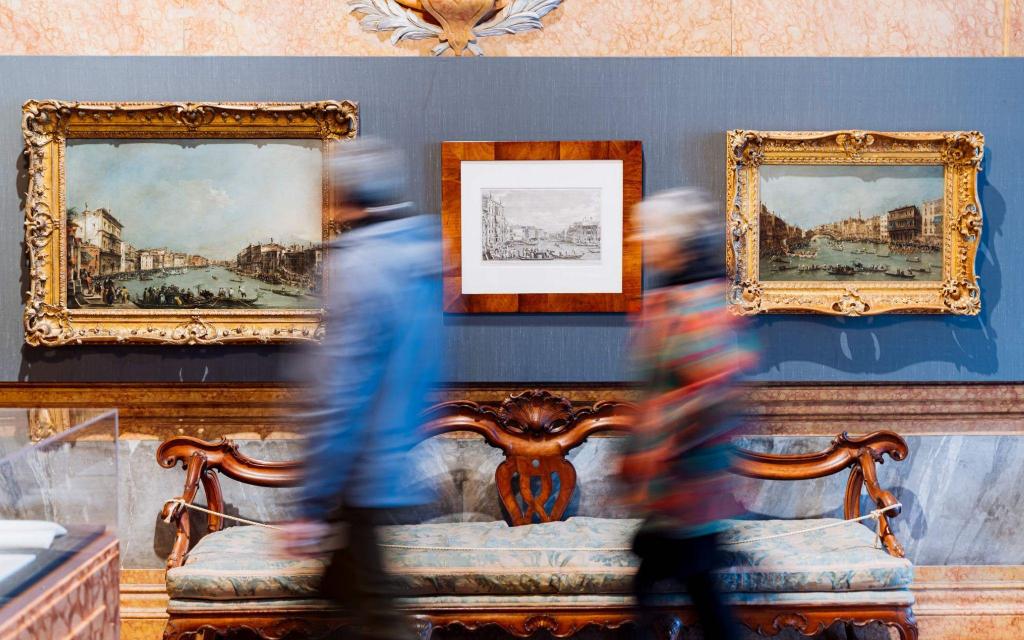
One of the most famous collections at the Gulbenkian Museum is represented by the splendid paintings of Francesco Guardi (1712-1793), the last great Venetian view painter of the Eighteenth Century, acquired in the first two decades of the Twentieth Century. These are some of the artist's most sublime works, famous for having started painting views in his mature age, after years of experimentation in the fields of history and genre painting. All dated between 1770 and 1790, Guardi's works at the Gulbenkian Museum are an extraordinary testimony to the artist's style, characterized by allusive brushstrokes and freely distorted proportions that create views in which the perspective structure appears elastic. Now distant from the geometric certainties of Canaletto and his camera obscura, the Venice portrayed by Francesco Guardi is composed of buildings corroded by light, rendered through a shimmering painting, as if the painter wants to offer an inner image of the city and a civilization, that of Venice, now in rapid decline. The subjects are those explored by the artist on various occasions, such as the Festa della Sensa in Piazza San Marco, the Regattas on the Grand Canal, and the Departure of the Bucentaur.
Thanks to the collaboration between the Foundation of Civic Museums of Venice and the Calouste Gulbenkian Museum, it is possible to admire in the portego of Ca’ Rezzonico a selection of these paintings by Francesco Guardi along with a group of sheets from the collections of the Cabinet of drawings and prints, in a dialogue between painting and graphic art aimed at deepening the creative journey of one of the iconic artists of the Venetian Eighteenth Century. Opened in 1969, the Calouste Gulbenkian Museum represents one of the most important cultural institutions in the city of Lisbon. The original core of its collections consists of the immense collection of the Armenian entrepreneur and philanthropist, naturalized Englishman, Calouste Sarkis Gulbenkian (1869-1955), known for his refined tastes and vast interests. The works he acquired over the years exceptionally testify to his great passion for art, from Greek and Roman to Impressionist, passing through Italian Renaissance and European Seventeenth Century, without neglecting decorative art objects.
Buy your ticket
Photo credits Foundation of Civic Museums of Venice